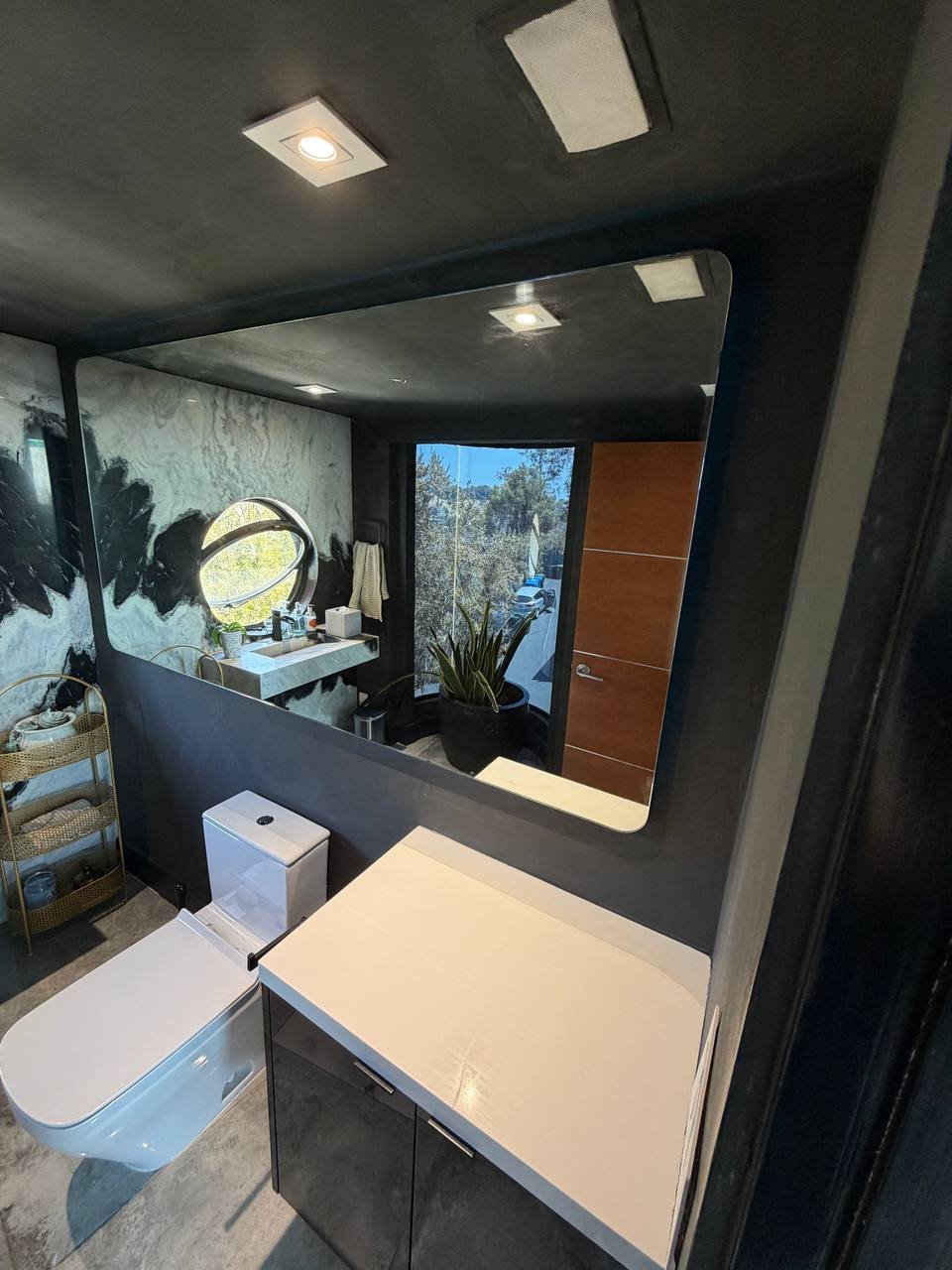
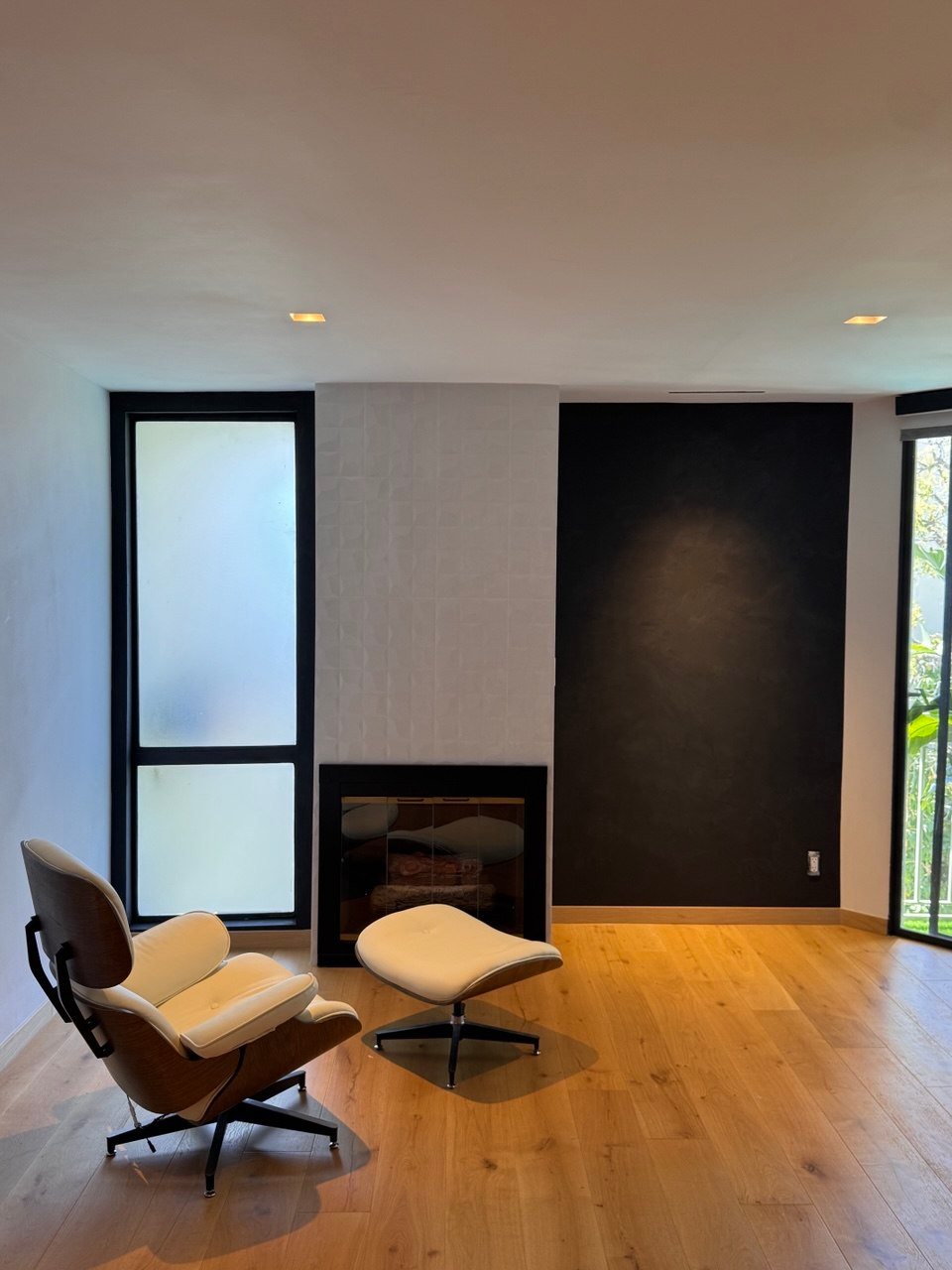
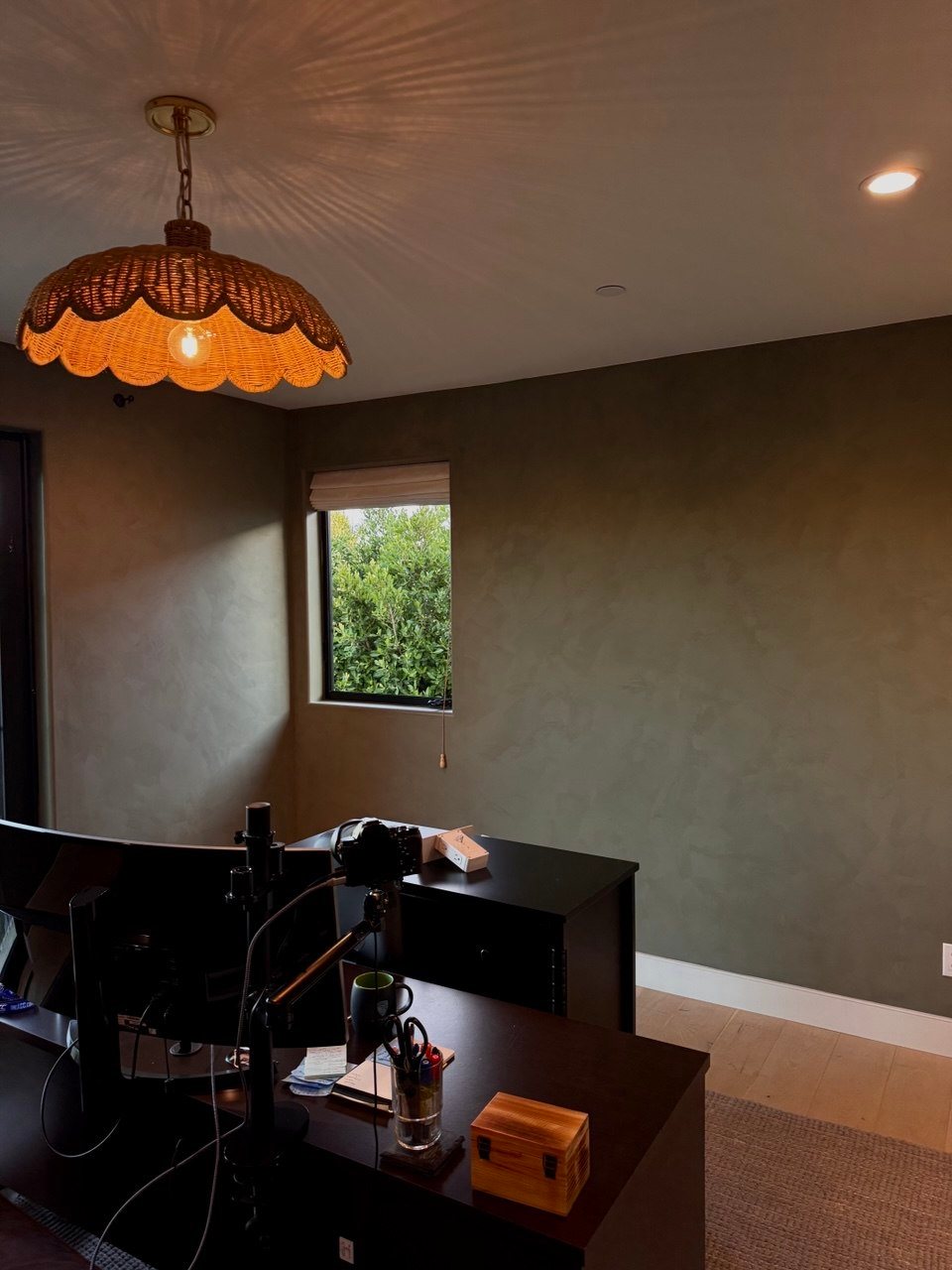
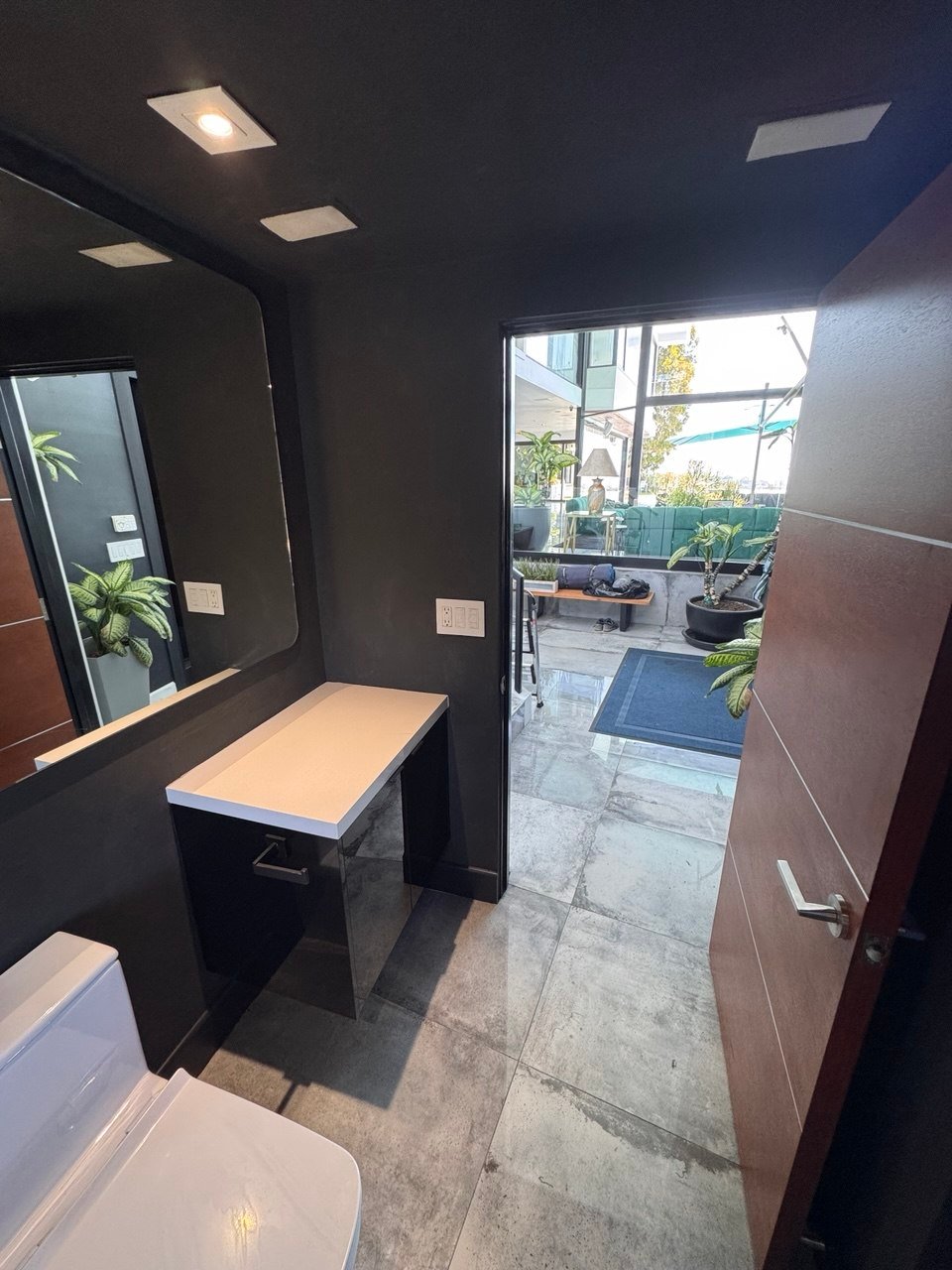
Troweled mineral plaster with the depth of stone. Roman clay reads smooth and sculptural; Moroccan clay is burnished tighter, in the tadelakt tradition, and seals to a soft water-resistant sheen.

Both finishes price the same. Clay is troweled in multiple thin coats, so the rate reflects the coat schedule and the burnishing time.
| Scope | Rate |
|---|---|
Feature wall A single sculptural wall. Highest rate per square foot. | $8 – $10 per sq ft |
Full room Four walls in one colour, prep and full coat schedule included. | $7 – $9 per sq ft |
Multi-room project Several rooms in one mobilisation. Best rate per square foot. | $6 – $7.50 per sq ft |
Burnish & seal upgrade Tadelakt-style burnish and sealer for wet areas and showers. | Quoted per project |
Rates cover labour and application — prep, primer and multiple troweled coats. Roman clay and Moroccan clay are the same material family; the difference is in how far the surface is burnished and whether it is sealed. Wet-area installations such as showers and sink niches are quoted separately after we see the substrate.
Skim and sand so the wall is flat. Clay is thin — every imperfection underneath will telegraph through.
A tinted primer close to the final colour so the trowel work reads evenly.
Two to three thin coats laid with a steel trowel, each burnished as it sets.
Matte or satin sealer for kitchens, sink walls and wet areas. Optional elsewhere.
All photographs are our own completed projects.


$6 to $10 per square foot of wall area. Feature walls run $8–$10, full rooms $7–$9 and multi-room projects $6–$7.50. Prep, primer and the full troweled coat schedule are included.
They share a mineral clay base. Roman clay is troweled smooth and left matte, reading like soft stone. Moroccan clay is burnished harder in the tadelakt tradition and then sealed, which gives a tighter, slightly lustrous and water-resistant surface. Pricing is the same.
Yes. Burnished and sealed Moroccan clay is traditional in wet rooms. Showers and steam areas need a specific build-up and are quoted separately after we look at the substrate and waterproofing.
Applied over a properly prepared, flat and primed substrate it does not. Movement cracks come from the wall behind, not the finish, which is why we skim and prime before any clay goes on.